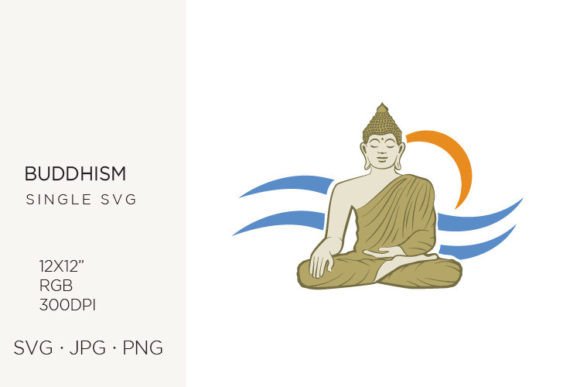
Unlocking Serenity: A Practical Guide to Using Sea Coast and Gold Buddha Vector Art
The fusion of coastal tranquility and spiritual symbolism offers a unique aesthetic that resonates with designers, entrepreneurs, and hobbyists alike. When you combine the calming imagery of a Sea Coast with the grounding presence of a Gold Buddha, you create a visual narrative that speaks to balance, peace, and natural beauty. These digital graphic elements, specifically crafted as vector-based clipart, provide an incredibly versatile foundation for a wide array of creative projects. Whether you are developing a brand identity for a yoga studio, designing custom wedding invitations, or creating handmade jewelry, understanding the technical nuances of these files is just as important as appreciating their artistic value.
These assets are typically produced in professional vector programs like Adobe Illustrator, ensuring they are scalable without losing quality. The standard delivery often includes multiple file formats such as SVG, JPG, and PNG, all derived from a high-resolution source with an artboard size of 12 x 12 inches at 300 DPI in the RGB color palette. While this sounds straightforward, many creators overlook critical details during the selection and implementation phases, leading to frustrating results in print or digital media. By recognizing common pitfalls early, you can ensure your final products look polished and professional.
Understanding the Technical Foundation
Before diving into design, it is essential to grasp what you are actually working with. A vector file is mathematically defined, meaning it uses points, lines, and curves rather than pixels. This allows you to scale a small logo on a business card up to a massive wall art mural without any pixelation. However, a frequent misunderstanding occurs when users confuse the raster previews (JPG and PNG) with the actual vector source (SVG or AI/EPS). The SVG file is your most valuable asset for editing and scaling. If you attempt to enlarge the JPG version for a large format print, you will encounter blurry edges and lost detail, regardless of the original 300 DPI claim, because raster images have a fixed resolution limit.
Another area where confusion often arises involves the color palette. These files are usually created in RGB (Red, Green, Blue), which is the standard color mode for screens, web design, and digital displays. If your project involves physical printing—such as stationery, announcements, or party decor—you must be aware that RGB colors can shift when converted to CMYK (Cyan, Magenta, Yellow, Key/Black) by a professional printer. Gold, in particular, is notoriously difficult to replicate accurately in standard four-color printing. Without proper adjustment, a vibrant digital gold can turn into a muddy brown or a dull yellow on paper. Always request a proof or adjust your color profiles if you are sending files to a commercial print shop.
Common Mistakes in Application and Usage
One of the most significant errors creators make is ignoring the context of the Sea Coast and Gold Buddha imagery. While the combination is visually striking, it requires thoughtful integration to avoid looking cluttered or thematically inconsistent. For instance, placing a highly detailed Gold Buddha icon over a busy, textured sea background can reduce legibility, especially if the end product is a small item like a piece of jewelry or a favicon for a website. Simplicity often yields better results; consider using the sea elements as a subtle border or background texture while letting the Buddha figure stand out as the focal point.
Additionally, many beginners fail to utilize the layered nature of vector files. When you open an SVG or Illustrator file, you often have access to individual components—the waves, the sand, the Buddha figure, and the sun. A common missed opportunity is treating the clipart as a flat, unchangeable image. By separating these layers, you can recolor elements to match specific brand guidelines or create variations for different seasons. For example, you might change the sea from a deep blue to a soft teal to match a summer party theme, or adjust the gold tone to a rose gold hue for a modern jewelry line. Ignoring this flexibility limits your creative potential and forces you to buy more assets than necessary.
There is also a tendency to overlook licensing terms and usage rights, assuming that purchasing a digital download grants unlimited freedom. While most personal and small commercial licenses allow for creating items like handmade cards and wall art, there are often restrictions on reselling the digital file itself or using the image in trademarked logos without an extended license. Using a Gold Buddha image in a logo that you intend to trademark could lead to legal complications if the asset is not exclusive. Always read the fine print regarding "end products" versus "digital redistribution."
Strategies for High-Quality Results
To maximize the value of your Sea Coast and Gold Buddha graphics, adopt a workflow that prioritizes verification and adaptation. Start by opening the SVG file in your vector software immediately after download. Check the artboard settings to ensure they align with your project needs. Since the source is 12 x 12 inches at 300 DPI, you have ample room to work, but remember that DPI is irrelevant for vectors until you export to a raster format. When exporting for web use, such as for a blog or social media, convert your vector to PNG with a transparent background to ensure it sits cleanly on any colored webpage.
For print projects like invitations or printed paper items, take the extra step of converting your colors to CMYK within your design software before sending them to print. If you are working with a professional printer, ask them specifically about their requirements for gold ink. Sometimes, adding a spot color channel for metallic gold is necessary to achieve that luxurious shine seen in the digital preview. Furthermore, when designing for small-scale applications like jewelry or stickers, simplify the composition. Remove intricate wave details that might blur when cut or printed at a small size, focusing instead on the bold silhouette of the Buddha and the general flow of the coast.
- Verify File Formats: Always locate and use the SVG or EPS file for editing and scaling; reserve JPG and PNG for final exports or quick previews.
- Manage Color Expectations: Understand the difference between RGB for screens and CMYK for print, and plan accordingly to avoid color shifts.
- Layer Your Design: Ungroup and separate vector elements to customize colors and compositions for specific projects.
- Check Licensing: Ensure your intended use, especially for logos or mass-produced items, complies with the seller's license agreement.
- Optimize for Scale: Simplify details for small items like jewelry or icons to maintain clarity and impact.
Making the Right Choice for Your Project
When evaluating whether the Sea Coast and Gold Buddha collection is right for your specific needs, consider the end-user experience. If you are creating wall art for a spa, the serene combination is perfect, but ensure the resolution supports the physical dimensions of the print. If you are a freelancer designing a logo for a wellness coach, verify that the vector paths are clean and closed, allowing for easy manipulation and embroidery digitization if needed. The versatility of these files means they can serve educators creating mindfulness materials, marketers launching a beachside resort campaign, or hobbyists making handmade crafts.
Ultimately, the quality of your output depends on how well you understand the tools at your disposal. These digital graphics are powerful resources that bridge the gap between professional design and accessible creativity. By avoiding the traps of incorrect file usage, color mismanagement, and thematic overcrowding, you can produce work that truly honors the peaceful synergy of the ocean and spiritual iconography. Take the time to explore the layers, test your prints, and respect the technical specifications, and you will find that these assets become a cornerstone of your creative portfolio, delivering satisfaction and professional results every time.