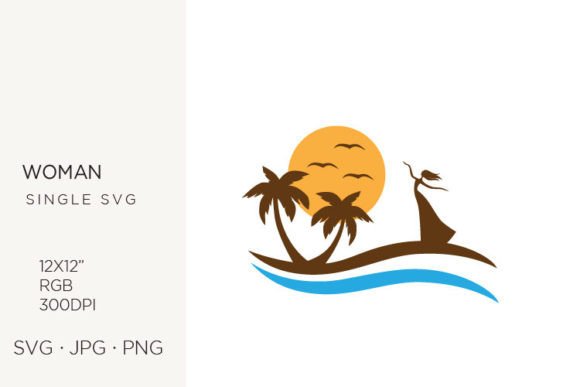
Unlocking the Potential of Tropical Island with Palm Trees Vector Art for Your Next Project
There is a distinct allure to imagery that evokes warmth, relaxation, and escape. Whether you are designing a summer sale flyer, crafting a wedding invitation for a destination ceremony, or building a brand identity for a travel blog, the visual language of a Tropical Island with Palm Trees instantly communicates a specific mood. However, sourcing and utilizing these graphics effectively requires more than just finding an image that looks nice at first glance. Many creators, from seasoned professionals to enthusiastic hobbyists, often overlook critical technical details that can turn a promising project into a frustrating experience. By understanding the nuances of vector files, resolution standards, and format compatibility, you can ensure your final output looks professional across every medium.
The core appeal of using vector-based art for tropical themes lies in its versatility. Unlike standard photographs or raster images, vectors are built on mathematical paths rather than pixels. This means the artwork remains crisp whether it is scaled down for a business card or blown up for a massive billboard. When you select a high-quality Tropical Island with Palm Trees illustration created in a program like Adobe Illustrator, you are investing in flexibility. Yet, a common misunderstanding arises when buyers assume all "vector" files are created equal. Not every file labeled as such offers the same level of editability or quality, and failing to verify the source can lead to significant roadblocks during the design process.
Navigating File Formats and Resolution Pitfalls
One of the most frequent errors creators make involves confusing file formats and their intended uses. You might see a listing advertising SVG, JPG, and PNG formats, which seems comprehensive. However, users often download the JPG or PNG for a print project, unaware that these are raster formats dependent on resolution. If the provided raster files are not at least 300 DPI (dots per inch), printing them on physical items like stationery, handmade cards, or wall art will result in pixelation and blurriness. This is particularly problematic for small business owners selling printed goods, as poor print quality can damage brand reputation.
To avoid this, always prioritize the SVG or native Illustrator file when working on print projects. These formats allow you to scale the Tropical Island with Palm Trees graphic to any size without losing detail. If you must use a PNG or JPG, check the dimensions immediately. An artboard size of 12 x 12 inches at 300 DPI is an excellent standard for many craft and print applications, offering enough resolution for high-quality output. Do not assume a web-optimized image will work for a physical product; the difference between 72 DPI (screen) and 300 DPI (print) is the difference between a professional finish and a blurry mess.
Furthermore, color management is often overlooked. Digital files typically use the RGB color palette, which is ideal for screens, websites, and digital invitations. However, if you are sending your designs to a professional printer for brochures or large-scale decor, they may require CMYK conversion. While modern printers handle RGB-to-CMYK conversion well, vibrant tropical greens and ocean blues can sometimes shift duller in print. A proactive approach is to request a proof or test print a small batch before committing to a large run. Understanding that your Tropical Island with Palm Trees clipart was designed in RGB helps you anticipate these shifts and adjust your expectations or settings accordingly.
Maximizing Versatility Across Different Mediums
The true power of a well-constructed vector pack is its ability to serve multiple purposes. Entrepreneurs and marketers often buy assets for a single campaign, missing the opportunity to repurpose them across their entire brand ecosystem. For instance, the same palm tree silhouette used in a logo design can be adapted for party decor, embossed on jewelry, or printed on packaging. The mistake here is treating the asset as a one-off image rather than a modular component of a larger visual strategy.
Consider the workflow efficiency gained by using layered vector files. When you open the file in Adobe Illustrator, you should be able to isolate individual elements—perhaps separating the palm fronds from the island base or changing the color of the sunset background. If you find the elements are flattened or grouped inseparably, your ability to customize the Tropical Island with Palm Trees motif is severely limited. Before purchasing or downloading, verify that the layers are organized logically. This allows you to create unique variations for different platforms: a simplified version for a social media avatar and a detailed version for a website header.
Handmade crafters and educators also benefit from understanding cut-file compatibility. While SVG is the gold standard for cutting machines like Cricut or Silhouette, not all SVGs are optimized for cutting. Complex gradients or overlapping paths that look great on screen can cause weeding nightmares or cutting errors. A better approach is to look for files specifically noted as "cut-ready" or to simplify the paths in your vector software before sending them to the cutter. This ensures that your handmade cards and announcements have clean edges and professional durability.
Essential Checks Before You Commit
Before integrating any graphic into your commercial or personal projects, a due diligence checklist can save hours of rework. First, examine the license terms. Just because a file is available for download does not mean it is free for commercial use. If you are a freelancer creating assets for a client or a small business owner selling products, ensure the license covers commercial application. Second, inspect the vector paths. Zoom in closely on the Tropical Island with Palm Trees illustration. Are the lines smooth? Are there unnecessary anchor points that complicate editing? Clean topology indicates a file made by an experienced designer in a professional vector program.
Additionally, consider the context of your audience. A stylized, cartoonish palm tree might be perfect for a children's party invitation but inappropriate for a luxury resort's branding. Evaluate the artistic style against your brand voice. Does the color palette align with your existing identity, or will it require extensive recoloring? If the latter, ensure the file structure supports easy color changes. Finally, test the file in your intended software. Occasionally, SVGs created in one program may render slightly differently in another. Opening the file in your primary design tool before starting the project ensures there are no compatibility surprises.
In conclusion, leveraging Tropical Island with Palm Trees graphics can elevate your creative projects, from web design to printed paper items. The key lies in respecting the technical specifications of vector art, understanding the limitations of raster formats, and verifying the usability of the files before deployment. By avoiding common pitfalls regarding resolution, layering, and licensing, you empower yourself to create high-quality, versatile, and visually stunning work. Take the time to choose the right assets, and your designs will reflect the professionalism and care that your audience deserves.