Integrating Children and Apple Tree Vector Graphics into Professional Creative Workflows
In the modern digital landscape, the efficiency of a creative project often hinges on the quality and versatility of its foundational assets. For professionals ranging from graphic designers and marketers to small business owners and educators, selecting the right visual elements is not merely an aesthetic choice but a strategic decision that impacts timeline, budget, and final output quality. The Children and Apple Tree vector collection represents a specific category of digital asset designed to bridge the gap between whimsical storytelling and professional application. By understanding how to integrate these high-resolution, scalable graphics into broader workflows, creators can streamline their production processes while maintaining a high standard of visual consistency.
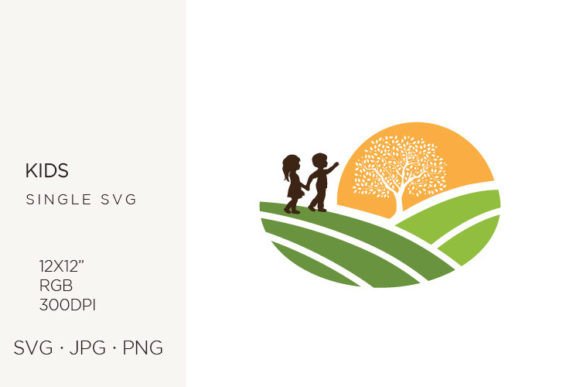
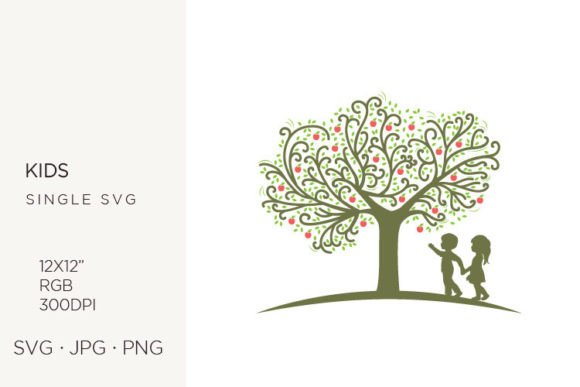
At its core, this asset pack consists of digital illustrations created within Adobe Illustrator, ensuring that every line and curve is mathematically defined rather than pixel-based. The inclusion of files in SVG, JPG, and PNG formats provides immediate compatibility across a vast array of software ecosystems, from web development environments to print-ready layout programs. The specification of a 12 x 12 artboard size at 300 DPI in RGB color palette indicates a file structure optimized for both screen display and high-quality physical printing. When incorporated into a project, these elements serve as versatile building blocks that can be manipulated, resized, and recolored without any loss of fidelity, a critical factor for professionals who need to adapt a single design concept for multiple mediums.
Strategic Placement in the Project Lifecycle
The utility of the Children and Apple Tree graphics extends beyond simple decoration; they function effectively at various stages of a project lifecycle. In the pre-production or planning phase, these vectors act as rapid prototyping tools. For entrepreneurs developing a brand identity for an organic food startup, an educational app, or a family-oriented event planning service, these images allow for quick mood boarding and concept validation. Because the files are vector-based, a marketer can instantly test how the imagery scales on a business card versus a billboard mockup, facilitating faster decision-making before committing to custom illustration commissions.
During the execution phase, the interoperability of the SVG format becomes particularly valuable. Web developers and UI designers can embed these graphics directly into code, ensuring crisp rendering on retina displays and mobile devices without the bandwidth penalty of large raster images. Meanwhile, print professionals utilizing the 300 DPI JPG or PNG exports can confidently place these elements into stationery designs, invitations, or packaging layouts, knowing the resolution meets industry standards for offset and digital printing. This dual-purpose nature eliminates the need to source separate assets for digital and print campaigns, thereby reducing asset management overhead and ensuring brand consistency across channels.
Post-project, these assets offer long-term value through reusability. A freelancer who creates a series of handmade cards using the apple tree motif can easily repurpose the same vector elements for a subsequent social media campaign or a website banner. The modular nature of the clipart allows for the creation of a cohesive visual language that can evolve over time. For instance, an educator might use the graphics to create classroom materials in September and then reuse modified versions for end-of-year announcements in June, simply by adjusting colors or adding text layers in their design software.
Technical Compatibility and Workflow Integration
Successful integration of any digital asset requires a clear understanding of its technical specifications and how they align with existing tools. The Children and Apple Tree collection is engineered for seamless adoption into standard creative suites. Since the source files are made in Adobe Illustrator, users with access to this software can unlock the full potential of the vectors, editing anchor points, expanding strokes, and modifying color palettes to match specific brand guidelines. However, the inclusion of SVG, JPG, and PNG formats ensures that users relying on alternative platforms—such as Canva, Figma, Affinity Designer, or even Microsoft Office products—can still utilize the graphics effectively.
For those focused on quality control, the 300 DPI resolution is a crucial metric. In the world of print, anything below 300 DPI risks appearing pixelated or blurry when viewed up close. These files meet that threshold, making them suitable for high-end applications like wedding invitations, premium product packaging, or framed wall art. The RGB color palette, while standard for digital screens, is also widely accepted by modern digital printers. However, professionals working in strict CMYK print environments should note that converting RGB vectors to CMYK within their layout software is a straightforward process, thanks to the clean vector paths that prevent color banding or artifacting during conversion.
Organization is another key component of a smooth workflow. When downloading and deploying these assets, it is advisable to establish a structured folder system immediately. Separating the editable vector files (SVG/AI) from the ready-to-use raster exports (JPG/PNG) prevents accidental overwriting and ensures that the master files remain pristine for future editing. Tagging these files with relevant metadata such as "nature," "education," "kids," or "organic" can further enhance searchability within large digital asset management (DAM) systems, saving valuable time during tight deadlines.
Practical Applications Across Industries
The versatility of the Children and Apple Tree theme opens up a wide array of use cases across different sectors. In the realm of handmade craft items, artisans can import these designs into cutting machine software to create vinyl decals, iron-on transfers for apparel, or intricate paper cuts for scrapbooking. The clean lines of the vector art ensure that cutting machines follow paths accurately, reducing material waste and improving the finish of the final product.
For graphic and web design professionals, these elements are ideal for creating engaging user interfaces for children's educational platforms or eco-friendly brands. The imagery conveys themes of growth, nature, and innocence, which can be leveraged to build trust and emotional connection with the target audience. A web designer might use the apple tree as a recurring motif in a scrolling narrative site, animating the SVG elements to add interactivity without compromising load times.
In the stationery and invitation market, the 12 x 12 artboard size provides a perfect square canvas for designing greeting cards, baby shower announcements, or birthday party decor. Designers can layer these graphics with typography and textures to create unique, bespoke looks that stand out in a saturated market. The ability to recolor the vectors allows for endless customization, enabling a single design to be adapted for spring pastels, autumn warm tones, or monochromatic minimalist styles.
Educators and publishers will find these assets invaluable for creating engaging learning materials. From worksheet headers to textbook illustrations, the clear and friendly style of the children and tree imagery supports cognitive engagement without distracting from the educational content. Furthermore, because the files are royalty-free for commercial use (subject to specific license terms), schools and publishing houses can incorporate them into curricula and published works without worrying about complex licensing negotiations for each individual use.
Optimizing for Long-Term Efficiency
To truly maximize the return on investment for digital assets like Children and Apple Tree, creators should adopt a mindset of systematic utilization. This involves not just using the files once, but building a library of variations. By saving customized versions of the vectors with different color schemes or compositional arrangements, designers create a personal toolkit that accelerates future projects. This approach fosters consistency in branding and reduces the cognitive load associated with starting every new design from scratch.
Moreover, understanding the limitations and strengths of the file formats helps in avoiding common pitfalls. For example, while JPGs are universal, they are lossy; thus, they should be reserved for final exports where editing is no longer required. PNGs offer transparency, making them essential for overlaying graphics on colored backgrounds or textured papers. SVGs remain the gold standard for scalability and editability. By matching the file format to the specific task at hand, professionals ensure optimal quality and performance.
Ultimately, the value of the Children and Apple Tree vector collection lies in its ability to adapt to the user's needs. Whether it is serving as the centerpiece of a logo design for a new orchard business, a decorative element in a nursery wall art print, or a functional icon in a productivity app, these graphics provide a solid foundation for creative execution. By integrating them thoughtfully into established workflows, paying attention to technical details, and leveraging their flexibility, creators can enhance their productivity and deliver higher quality results for their clients and audiences.